
It is clear from the research (see health risks and interventions page) that the majority of adolescent self-harm incidents are invisible to public health settings.
Providing support through other social settings therefore may be a feasible option. This is just one of many reasons why schools are central for public health research in regards to adolescent self-harm.
WHOLE-SCHOOL APPROACH
A whole-school approach to mental health and well-being for pupils is posited in research, which entails public mental health promotion within schools (Fazel et al.2014ab). A systematic review by the World Health Organization demonstrated the effectiveness of this approach for pupils’ mental health (WHO, 2006).
For mental health promotion within this whole-school approach, the research agenda now is to centre upon fully understanding the school context (WHO, 2006: Fazel et al. 2014ab) and the evidence of what works (how, why, for whom and for what purpose). An exposition is required of the detailed mechanisms. Process evaluation (Moore et al. 2015) is one approach to this.
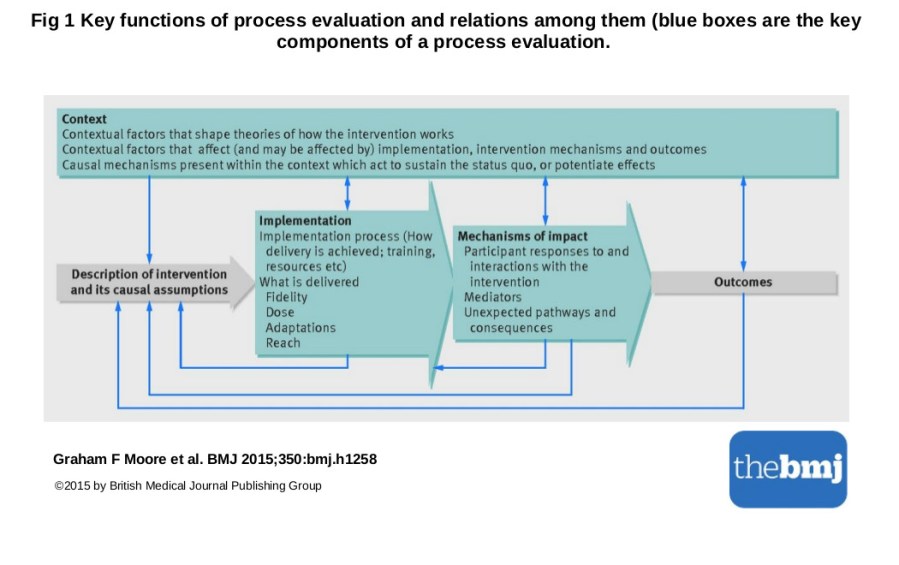
Utilising process evaluation, this research project (based in DECIPHER at Cardiff University) generated a model of the contextual influences that surrounded adolescent self-harm in the secondary school context. This was a comprehensive model of STIGMA, which delineated the properties and dimensions of stigma within the secondary school context.
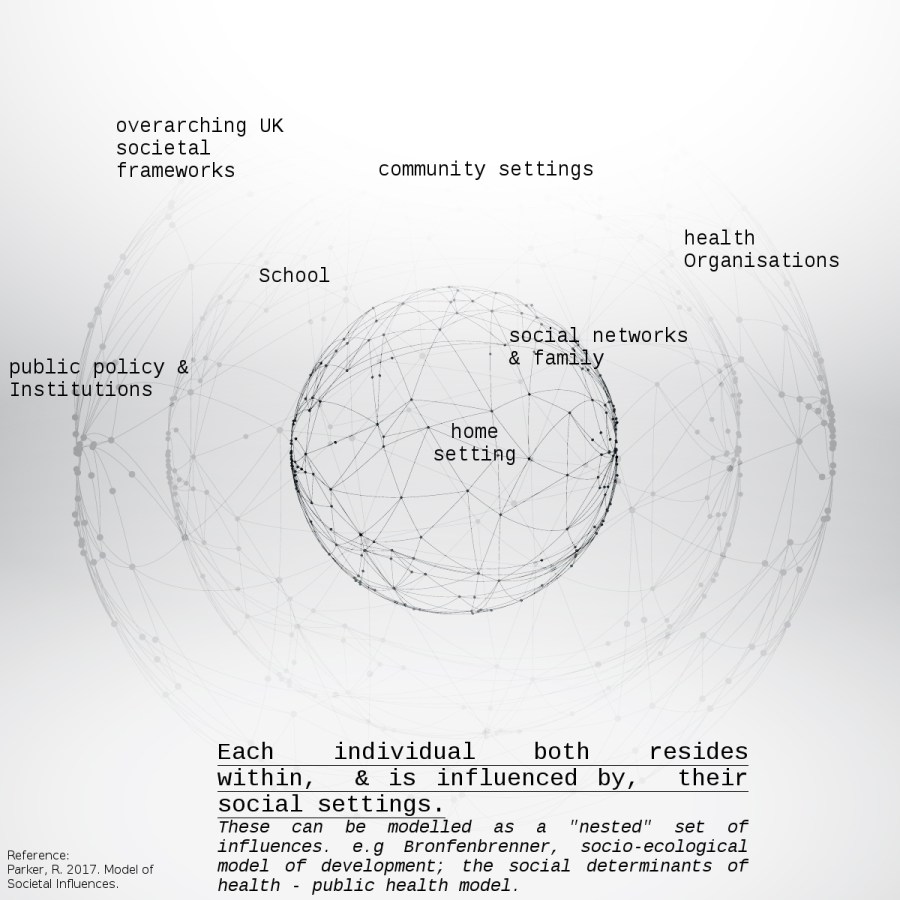
The Project’s CONTEXTUAL ANALYSIS using THE PUBLIC HEALTH SOCIO-ECOLOGICAL MODEL
In a public health approach it is understood that schools reside within a wider set of societal influences. This is called the public health socio-ecological model. These influences may both inform and shape schools’ organisational practices and responses to adolescent self-harm within their settings (such as in governmental and local authority policy frameworks and directives).
Additional system-level information was gathered from outside of the secondary school context to supplement the explanatory analysis of the initial school-based research data and results. This was completed at both local and national levels in Wales.
For example: community expert representatives in Local Authorities will be interviewed (from within education, health and social care); also community experts in the National Public Health Network in Wales.
REFERENCES:
Fazel, M., Hoagwood, K., Stephan, S. and Ford, T. 2014a. Mental Health Interventions in Schools 1. Mental health interventions in schools in high-income countries. Lancet Psychiatry, 1(5), pp. 377 -387.
Fazel, M., Patel, V., Thomas, S. and Tol, W. 2014b. Mental Health Interventions in Schools 2. Mental health interventions in schools in low-income and middle-income countries. Lancet Psychiatry, 1, pp. 388 -398.
Grandclerk, S., Labroueh, D.D., Spodenkiewicz, M., Lachal, J. and Moro, M. 2016. Relations between Nonsuicidal Self-Injury and Suicidal Behavior in Adolescence: A Systematic Review. PLoS ONE 11(4): e0153760. doi:10.1371/ journal.pone.015376. See https://www.ncbi.nlm.nih.gov/pmc/articles/PMC4835048/pdf/pone.0153760.pdf
Hawton, K., Saunders, K. E. A. and O’ Connor, R. C. 2012. Self-harm & Suicide in Adolescents. The Lancet, 379 (9834), pp. 2373 – 2382. See http://thelancet.com/action/showFullTextImages?pii=S0140-6736%2812%2960322-5
Hospital Episodes Statistics Analysis Team. 2015. Count of Finished Admission Episodes in England for Self-Harm (for ages 10 – 19 years) for 2006 to 2015. Leeds: Health and Social Care Information Centre.
Moore, G., Audrey, S., Barker, M., Bond, L., Bonell, C., Hardeman, W., Moore, L., O’Cathain, A.,
Tinati, T., Wight, D. and Baird, J. (2015) ‘Process Evaluation of Complex Interventions. UK
Medical Research Council Guidance’, BMJ. [Online]. DOI: http://dx.doi.org/10.1136/bmj.h1258
Muehlenkamp, J.J., Claes, L., Havertape, L. and Plener, P.L. 2012. International Prevalence of Adolescent Non-Suicidal Self-Injury and Adolescent Self-Harm. Child & Adolescent Psychiatry & Mental Health. 6 (10). DOI: 10.1186/1753-2000-6-10
National Children’s Bureau/Association of School and College Leaders. 2016. Keeping Young People in Mind. Findings from a Survey of Schools in England. Available at: https://www.ncb.org.uk/news-opinion/news-highlights/school-leaders-voice-concerns-over-childrens-mental-health-care
NHS. 2017. Self-harm. Available at: http://www.nhs.uk/Conditions/Self-injury/Pages/Introduction.aspx
Wolfe, I., Macfarlane, A., Donkin, A., Marmot, M. and Viner, R. 2014. Why Children Die. Death in Infants, Children & Young People in the UK. London: Royal College of Paediatrics & Child Health and National Children’s Bureau. See http://www.rcpch.ac.uk/news-campaigns/campaigns/why-children-die/why-children-die-rcpch-campaign
World Health Organization. 2006. What is the evidence on school health promotion in
improving health or preventing disease and, specifically, what is the effectiveness of the health promoting schools approach? Geneva: WHO.
World Health Organization. 2016. Practice Manual for Establishing and Maintaining Surveillance Systems for Suicide Attempts and Self-Harm. Geneva: World Health Organization.


You must be logged in to post a comment.